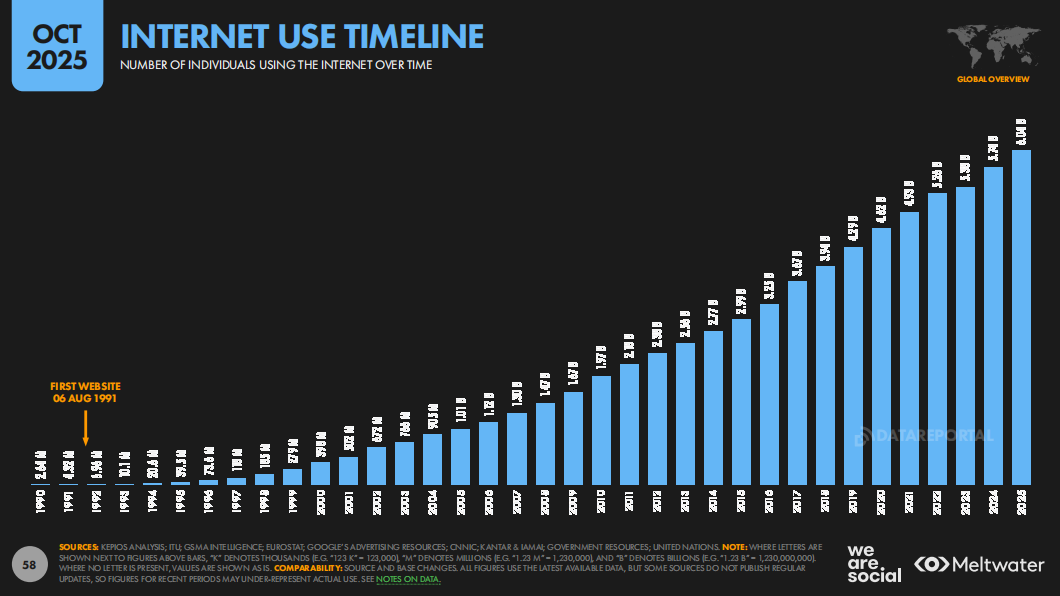
While many entities going global are still wondering "where the market is and how to enter it," the 2026 Global Digital Insights Report (hereafter referred to as the "Report") provides answers with a set of solid data: 6.04 billion people worldwide have access to the internet (accounting for 73.2% of the global population), over 1 billion people use large language model/generative AI (LLM/GenAI) tools, and 56.5% of internet users shop online weekly... Digitalization is no longer a "bonus" for going global, but an "entry barrier" that must be crossed. However, behind these opportunities lie many "hidden reefs": 96% of users in Southeast Asia access the internet via mobile phones but are concerned about slow loading speeds; 59.1% of internet users in Europe reject website cookies; 77% of people in Nigeria are excited about AI, yet only 2% have used ChatGPT... This article extracts 5 key insights from the Report, not only pointing out the direction for enterprises but also helping individuals/small studios find low-threshold paths.
Global Digital Fundamentals: Don't Miss These 3 "Blue Ocean Signals"
The global digital market in 2026 is no longer a space where "casting a wide net guarantees gains". Three sets of data from the report hold the growth opportunities that deserve the closest attention:
●2.2 Billion "Unconnected Population": Growth Lies in India/Pakistan/Nigeria
The report shows that there are still 2.13 billion people worldwide without internet access. Among them, India ranks first with 440 million unconnected people, followed closely by Pakistan (139 million) and Nigeria (130 million). These markets share clear common traits: they are mobile-first (96% of internet users in India access the internet via mobile phones), and their demand focuses on "basic services" — 60.7% of internet usage is for "information searching", 58.7% for "contacting relatives and friends", and there is higher acceptance of "lightweight digital products".
For example, Temu, one of the world's top 3 e-commerce platforms (with 1.63 billion monthly visits), has launched "simplified APPs" in India and Nigeria. By removing complex functions to adapt to low-end mobile devices, it has quickly seized the local market for rigid-demand products. This is a precise implementation of the strategy "solve pain points first, then upgrade the experience".
●105.5% Mobile Penetration Rate: Is Your Product "Mobile-Friendly"?
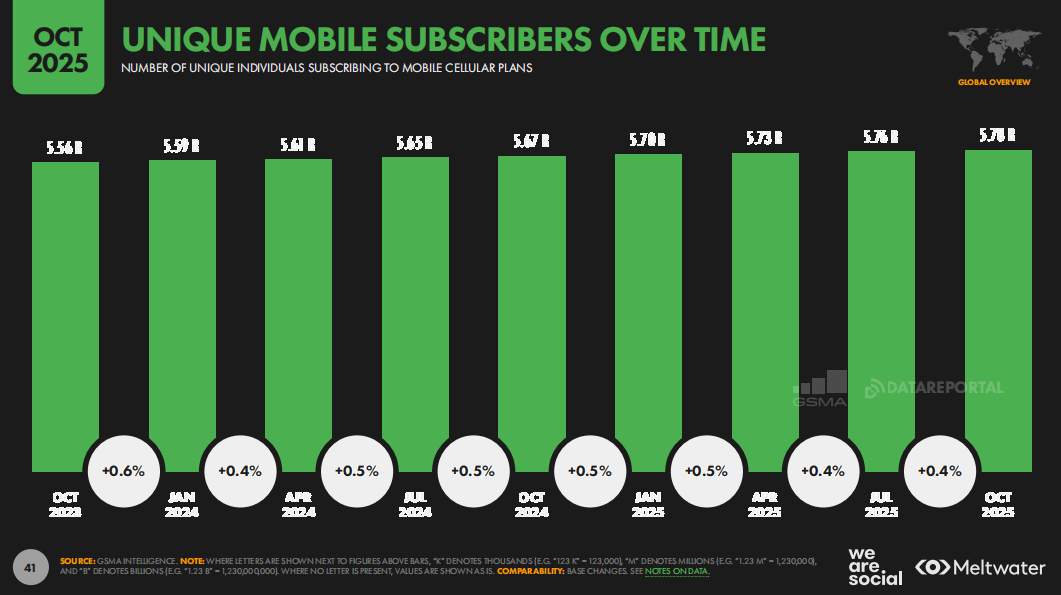
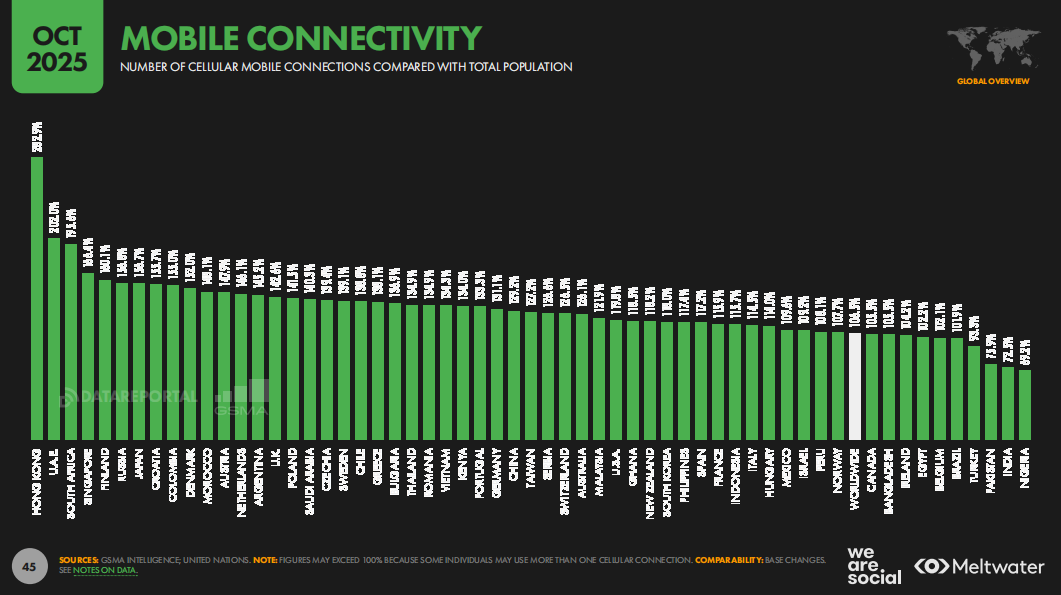
There are 105.5 mobile connections per 100 people worldwide (Hong Kong has the highest rate at 282.9%, with nearly 3 devices per person), and smartphones account for 83.7% of total mobile connections (approximately 7.38 billion connections). This means: if you still stick to "developing for PC first and then adapting to mobile", you are giving up 96% of traffic (96% of global internet users access the internet via mobile devices).
The report emphasizes that Southeast Asia (Saudi Arabia has 82.7% mobile traffic share) and the Middle East (the UAE has 80.4%) are "absolute mobile-dominated regions", where users even "complete the entire shopping process using only mobile phones". To adapt to such markets, Amazon has specially launched "text-only shopping pages" to reduce image loading volume. As a result, page loading speed increased by 40%, and the conversion rate rose by 18% accordingly.
●E-Commerce Scale of USD 3.66 Trillion: "Free Shipping" Is a Universal Code Worldwide
Global B2C e-commerce grows by 13% annually, but the "key to transactions" varies across markets, and the report provides clear data:
▎Emerging markets focus on "basic benefits": 71.3% of internet users in Nigeria shop online weekly, 50.7% care most about "free shipping", and 38.9% pay close attention to "discounts". AliExpress launched "free shipping for orders over USD 20" locally, leading to a 35% monthly increase in order volume.
▎Mature markets prioritize "experience upgrading": the US has the highest online shopping penetration rate globally at 53.3%, 28% of users care about "next-day delivery", and 31.7% demand "flexible returns". Relying on Prime members' "free shipping + next-day delivery", Amazon accounts for 45% of the local e-commerce market share.
Major Shift in User Behavior: Don’t Fall into New Pitfalls with "Outdated Experiences"
A set of "counter-intuitive" data in the report deserves special attention:
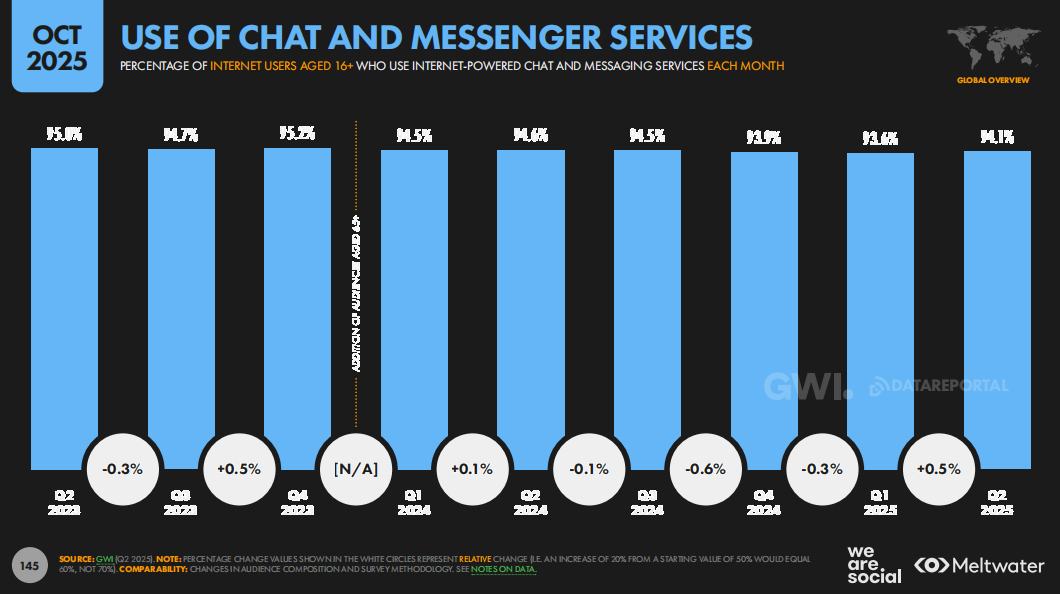
while global internet users spend an average of 33 hours and 24 minutes online per week, this figure is only 15 hours and 10 minutes in Japan; 94.1% of people use messaging apps monthly, yet only 8.3% of Japanese users use video calls. Regional differences in user behavior directly determine the success or failure of entities going global.

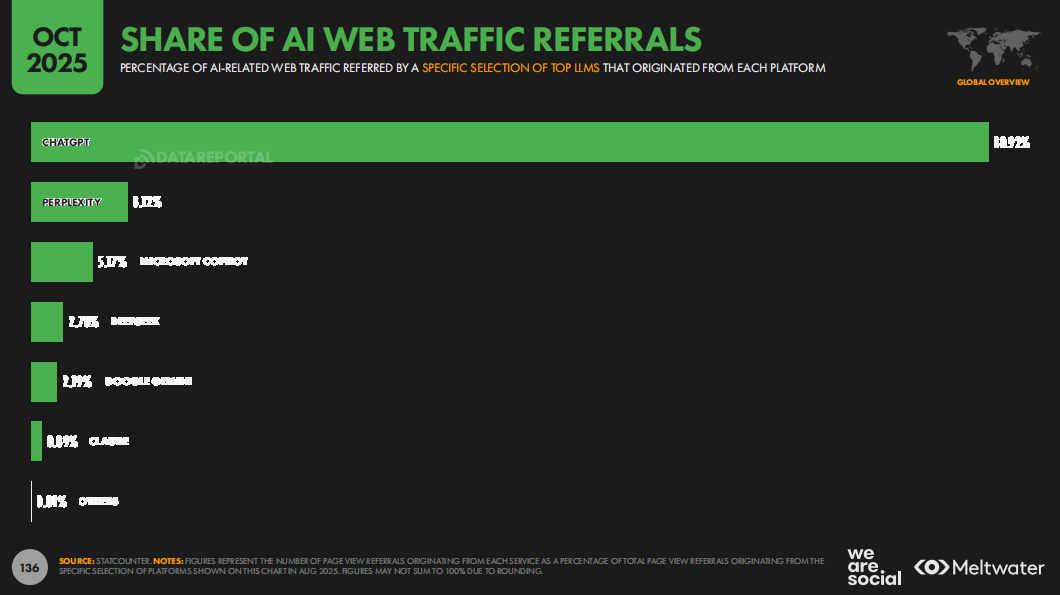
60.7% of internet users go online to "find information", but the way they do so has changed: ChatGPT has 557 million monthly active mobile users and 489 million website visitors, accounting for 80.92% of global AI traffic. 18.3% of users use it to "find specific information", 10.6% for "text editing", and 10.2% for "learning assistance", making it a supplement to search tools. The report’s data on Google Gemini—with 70.1 million monthly active users—also confirms that AI does not "replace search" but "fills gaps in segmented scenarios": users search for "restaurant addresses" on Google, but ask "Is this children’s meal suitable for a 3-year-old?" on ChatGPT.
This suggests that entities going global need to integrate AI into their scenarios. For example, Wikipedia (with 361 million monthly visits) has added AI Q&A modules to its content. When users look up "product knowledge", they can quickly get simplified explanations, which has increased user dwell time on pages by 25%.
Although TikTok’s #fyp hashtag has garnered over one trillion views, the report clearly states that 75% of users use social platforms to "stay in touch with relatives and friends". Facebook (1.19 billion monthly visits) and WhatsApp (384 million monthly visits) remain the world’s top-tier tools. This means that for social marketing, instead of only creating "flashy short videos", focus on "relationship-based interactions".
For instance, Instagram’s "Family Shared Albums" have 820 million monthly active users. A cross-border clothing brand launched a "Family Outfit Challenge" in Southeast Asia, where users could upload photos of their family’s outfits to enter a lottery. This not only aligned with the local "family-centric" culture but also tripled UGC (User-Generated Content) volume and increased brand exposure by 62%.
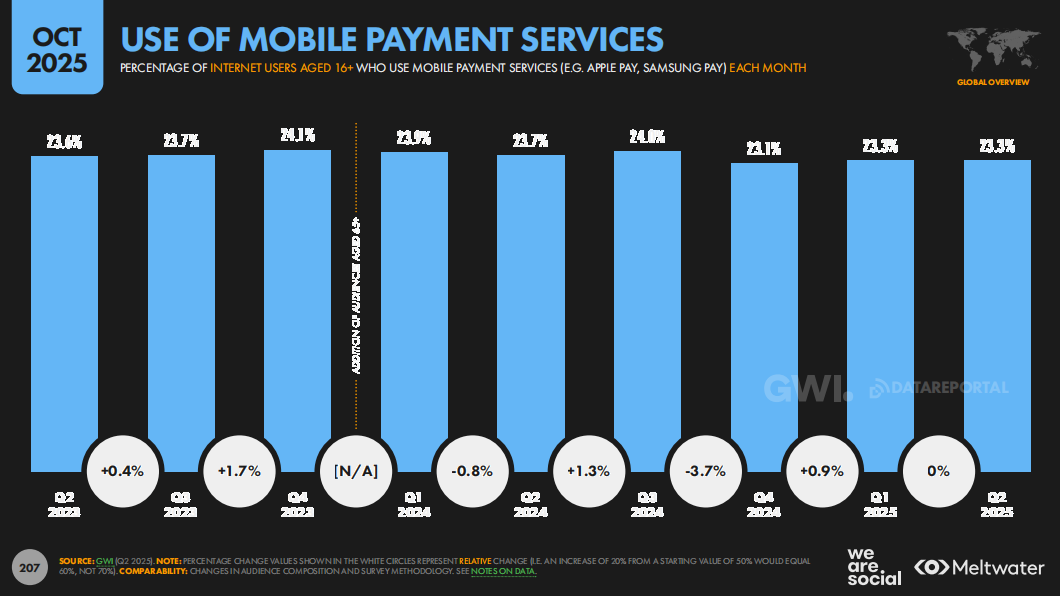
Globally, 53% of e-commerce transactions use digital wallets, 20% use credit cards, and 12% use debit cards—but regional differences can "derail" businesses:
▎Emerging markets: Only 8.2% of users in Nigeria use online translation tools; only displaying English on payment pages will lead to user loss. The report mentions that M-Pesa has a 43% usage rate in Kenya. After a cross-border food delivery platform integrated M-Pesa, its payment success rate rose from 68% to 92%.
▏Mature markets: 59.1% of users in Europe reject website cookies. Mandatory privacy authorization before payment results in an abandonment rate of 37%. A platform in the EU adjusted its policy to "no authorization required for basic functions and voluntary opt-in for personalized recommendations", which increased its payment conversion rate by 22%.
Individuals/Small Studios: 4 Low-Threshold Entry Directions
AI Has Become New Infrastructure: It’s Not "Whether to Use It" but "How to Use It Correctly"A set of AI-related data in the report is quite striking: over 1 billion people use LLM/GenAI, yet there are significant gaps between "acceptance level" and "usage rate" across different markets — 77% of people in Nigeria are excited about AI, but only 2% have used ChatGPT; 36.4% of people in Japan are interested in AI, with a usage rate of less than 5%.
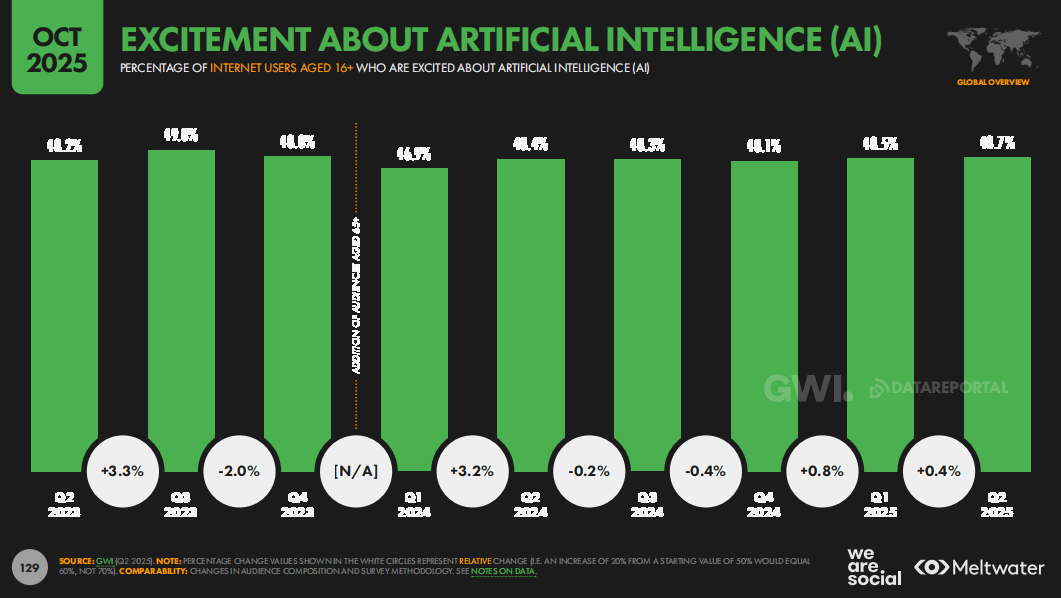
For entities going global, the key is not to "blindly jump on the AI bandwagon" but to "adjust strategies based on market conditions". The report provides a clear roadmap:
Emerging Markets: Use AI to Reduce Costs, Avoid Unnecessary Sophistication
Users in India and Pakistan demand AI for "basic tools" (translation, text editing). A cross-border e-commerce platform in India used AI to automatically generate product descriptions in Hindi and Urdu, improving efficiency by 80%, reducing labor costs by 65%, and avoiding "returns caused by language errors".
Mature Markets: Use AI to Enhance Experience, Prioritize Privacy
Users in Europe are sensitive to AI data. A cross-border home furnishing brand in Germany clearly stated in its AI recommendation feature that "only browsing history is used, and no personal information is stored". As a result, its user acceptance rate increased from 38% to 67%, and the recommendation conversion rate rose by 21%.
Individuals/Small Studios: 4 Low-Threshold Entry Directions
For individuals or small studios with limited resources, the data in the report reveals "low-investment, high-return" opportunities. There’s no need for large teams or heavy assets—focusing on "segmented scenarios + lightweight operations" is sufficient:
Start with "Mobile Light Services" to Avoid Technical Barriers
The report states that 96% of global internet users access the internet via mobile devices, and demand for "simplified tools" is strong in Southeast Asia (Indonesia, Vietnam). There’s no need to develop complex apps; instead, enter the market through "mini-programs + social media": for example, creating "multilingual currency converter" or "local life guide" tools for Southeast Asia, or selling niche product categories on TikTok/Instagram. The report mentions that 54.2% of users in Southeast Asia go online to "watch videos"—a individual seller who filmed short videos dissecting "local popular outfits" sold over 500 clothing items monthly. The core lies in "creating content with mobile phones and receiving orders via mini-programs," with a technical cost of only a few thousand yuan.
Leverage AI to Reduce Costs: Focus on Basic "Text + Translation" Scenarios
There’s no need to pursue "complex AI-generated content." The report notes that ChatGPT’s scenarios—18.3% for "finding information," 10.6% for "text editing," and 4.5% for "translation"—are precisely opportunities for small teams:
Lock in "High-Demand, Low-Competition" Segmented Scenarios in Emerging Markets
Markets with a large unconnected population in the report actually offer "small but beautiful" opportunities:
In India, where 440 million unconnected people are gradually gaining internet access, demand for "mobile top-ups" and "simple shopping" is high. Individuals can accept orders through "local communities + third-party platforms";
In Nigeria, 71.3% of internet users shop online weekly, but the local supply chain is weak. Small studios can operate as "purchasing agents for lightweight Chinese goods," using AliExpress for dropshipping and focusing on "small home items" (the report notes that home e-commerce grows by 15%). There’s no need for inventory, so risks are low.
Payment & Compliance: Prioritize "Local Adaptation" Before "Comprehensiveness"
There’s no need to integrate with global payment systems. The report states that 54% of transactions use e-wallets, so prioritize connecting to mainstream e-wallets in the target market: integrate M-Pesa for the Kenyan market (43% local usage rate) and GrabPay for Southeast Asia. For compliance, avoid high-risk areas—Europe has a high cookie rejection rate, so simplify website functions initially and don’t force data collection; Japanese users spend less time online, so keep content within 1 minute to align with local "efficient browsing" habits (the report shows Japanese users spend only 15 hours online weekly on average).
After reading this report, the most profound insight is that there is no "one-size-fits-all formula" in the digital wave, but there is an "underlying logic": the 6 billion internet users do not want "the most advanced products", but "the most accessible services"; the 1 billion AI users do not want "the most intelligent tools", but "the most practical help".

Disclaimer: Except for original content and special instructions, the text and pictures in the manuscript are from the Internet and major mainstream media. The copyright belongs to the original author. If you think the content infringes your rights, please contact us to delete it.